





















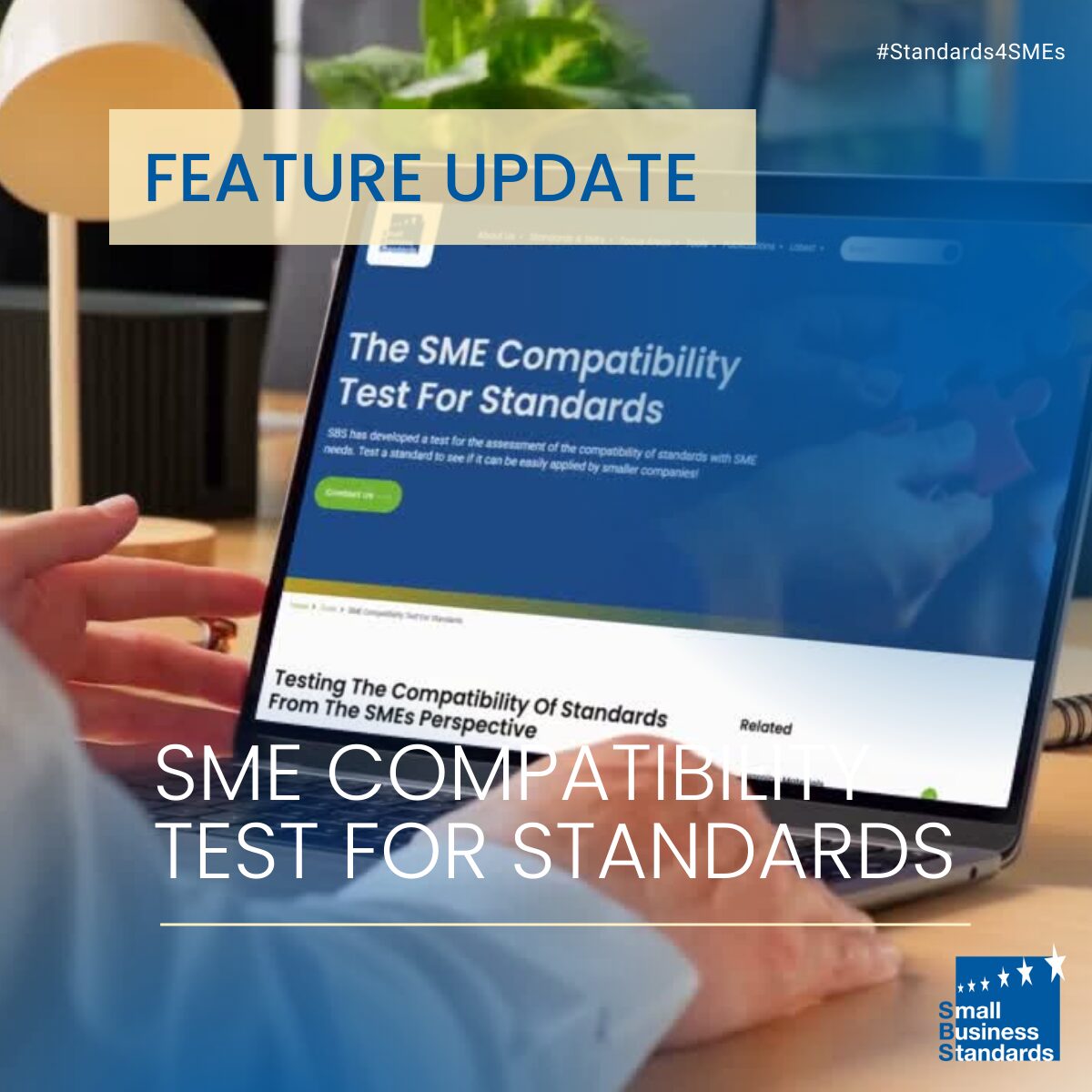
SBS is launching today a new and updated version of its SME Compatibility Test for Standards. The Compatibility Test, originally launched at the end of 2020, provides an overall appraisal of the SME compatibility of a given standard. The Compatibility Test is based on CEN-CENELEC and ISO Guide 17 “Guidance for writing standards taking into account micro, small and medium-sized enterprises (SMEs) needs”.
The Compatibility Test can be used both by standards developers and standards users, and is based a mix of multiple choice and open questions to assess the SME-friendliness of any given standard, whether already published or still under development, assessing it with a numerical score on a scale of 0 to 100.. The Test consists of 25 questions, falling under 11 different criteria (weighted differently based on their importance), covering all aspects of a standard, from scope to quality of the drafting, to implementation to impact and costs incurred by SMEs and users.
The new version of the Compatibility Test launched today brings a number of important changes and improvements, including:
- A new, more stringent scoring system, more aligned with the difficulties that SMEs can encounter in the implementation and use of standards.
- A new “flagging” system, where the user of the Compatibility Test can highlight a key flaw or shortcoming of an otherwise good standard.
- Increase in the weight of all questions concerning the cost of actions to be taken by SMEs to comply with the standard (testing; staff training or hiring…)
- Increase in the weight of the questions concerning normative references
- Additional questions to assess the clarity of the standard, and whether it represents the state of the art in its field
- Additional questions on whether the standard foresees specific tools or guidance for SMEs in its use and implementation
The new SBS SME Compatibility Test will offer even more value to its users, providing concrete guidance on how to draft standards following the needs and specificities of SMEs and giving an even clearer picture of where existing standards can and should improve to make sure that SMEs can use them and fully reap their benefits.